
| Home | More Pictures |
China's 3 Gorges & Zhanjiajie (Chongqing, 3Gorges, Zhanjiajie, Shaoshan & Hengshan)| Home | More Pictures |
China's 3 Gorges & Zhanjiajie (Chongqing, 3Gorges, Zhanjiajie, Shaoshan & Hengshan)
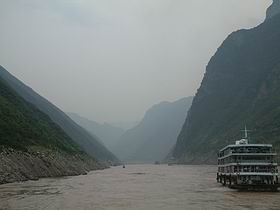
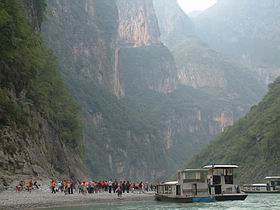
After the 17 days Silk Road 2002, a group of 5 extended the trip for another 11 days. This was on a cost-sharing basis with usage of public buses and no pre-booked accomodations. While the rest of the 11 left Guangzhou for KL, we flew to the town of Chongqing. Upon arrival at the airport, we opted to make arrangements for the standard 3 Gorges tour with a travel agent based at the airport because of the holiday peak period. These arrangements included transfers to town and jetty. The ferry boats were scheduled to leave at 8pm leaving us a couple of hours in Chongqing to visit the Jialing Bridge over the Yangtze and the town museum wiith its dieplay of dinosaur bones dug up from sites in the Province.
After an overnight journey, we stopped at the town of Fengdu, which houses the much visited Ghost Temples. This early dawn visit with probably 400 other domestic tourists was a rush affair which was a prelude to the way we would be visiting the other sites on the 3G. After breakfast of "tapau pau" we boarded the boat for the next destination. Decent affordable food is available at the boat's restaurant but there are loads of cheap eats, sold at the many stops.
Our next stop was the Zhang Fei Temple, which we visited at about 8pm followed by a ridiculous midnight visit to Baodicheng (White King's Palance) with the same group of 400. By the time we got back to the boat it was almost 3am leaving us with a few hours of shut-eye before our schedule tour of the Little 3G at 7am. We were off-loaded onto smaller crafts for the 6 hours duration on this more scenic part of the whole trip. By the time we headed back to the big boats, many of us were completely zonked out. Fortunately the cruise gave us much time for naps and rest.
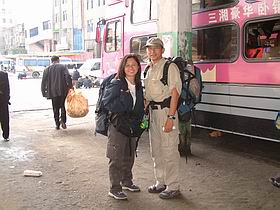
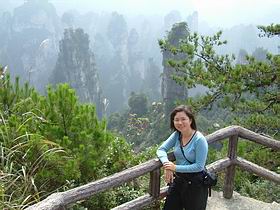
Backpackers and purblic buses / Fairy land of Zhangjiajie
We finished our 3G cruise at the town of Yichang instead of Wuhan, which is day further and a little boring, according to the LP. We arrived at about midnight and had some difficulties getting to the railway station for our onward journey to Zhangjiajie. With some help from some locals we managed to get onto the train but there were absolutely no seats available. Even the first class tickets were full and we had to endure 8 torturous hours in the crowded poorly ventilated train. After that, it was another 2 hours to Zhangjiajie City and another hour to Zhanjiajie Village, where we settled in for the night.
After a good night sleep, we headed towards the entrance, a 5 mins walk but we were accosted by about 20 locals offering guiding services. Forturnately they dissappeared after about an hour of incessent hassling and only then, could we enjoy our visit of this Unesco listed site. Zhangjiajie is an area of massive limestone karst pillars and formations that reminds one of the Chinese paintings one sees. We did so much trekking that we were tired out by the end of this fruitful day.
The second day, we headed to another viewpoint that few "tourist" go, known ast the First Bridge to Heaven. The scenery and photography opportunities were excellent and we enjoyed just sitting around enjoying the view. The trek up to this spot took us some 3 hours but oly 1 hour walking down, leaving us enough time for some lunch before heading to Zhangjiajie City for our overnight sleeper bus to Changsa, the capital of the province of Hunan.

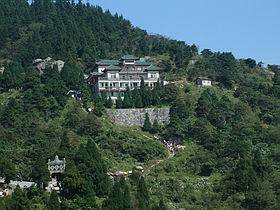
One of the best viewing spot in Zhangjiajie / Pilgrims up in Hengshan
After breakfast in Changsa, we caught a local bus to Shaoshan, a 1.5 hours journey. Shaoshan is the birthplace of Mao Zedong, the reverred leader of the Communist Party. We visited his family house that has been turned into a National Museum. Mao Zedong came from a wealthy farming family and lived in a good-sized farmhouse. As it was China's National Day, there were the usual hordes of holiday tourists but most came on day trips. This once pleasant quiet village has become another of China's mass tourism site.
Our next and final destination was Heng Shan Nan Yue, one of China's many holy mountains. The trip took us the whole morning but we had good bus connections. Hengshan is more of a Taoist religious place rather than Buddhist as reflected by the numerous Taoist temples. We visited the main temple of Hengshan at the foot of the mountains. This temple complex is huge and well patronised with mostly worshippers rather than tourists.
Early the next morning, we visited the mountain proper. There are convenient and very affordable public transport all the way to the top of the mountain but the roads are typically narrow and winding. There are probably a hundred temples on this mountain but visits are usually made to about a dozen of the more popular and sizeable ones. These very old temple are well stocked with the usual statues of Buddha and the other Chinese dieties. Unfortunately the hordes of worshippers and accompanying public vehicles have an adverse effect on the "Holiness" of the mountain, with the constant dronning of revving engines and irritable hornings. Later that evening, we left for Guangzhou on a comfortable overnight sleeper train.
We had a whole day and a half in Guangzhou before our flight home and took the chance to visit the Six Banyan Trees Temple and the nearby Filial Piety Temple. We used the efficient 100% Chines made underground Metro lines to move about the city. Apart from that I also shopped for outdoor gear manufactured in China for the expensive American brands and discovered a well-stocked adventure gear shop for my future visits.
| Home |